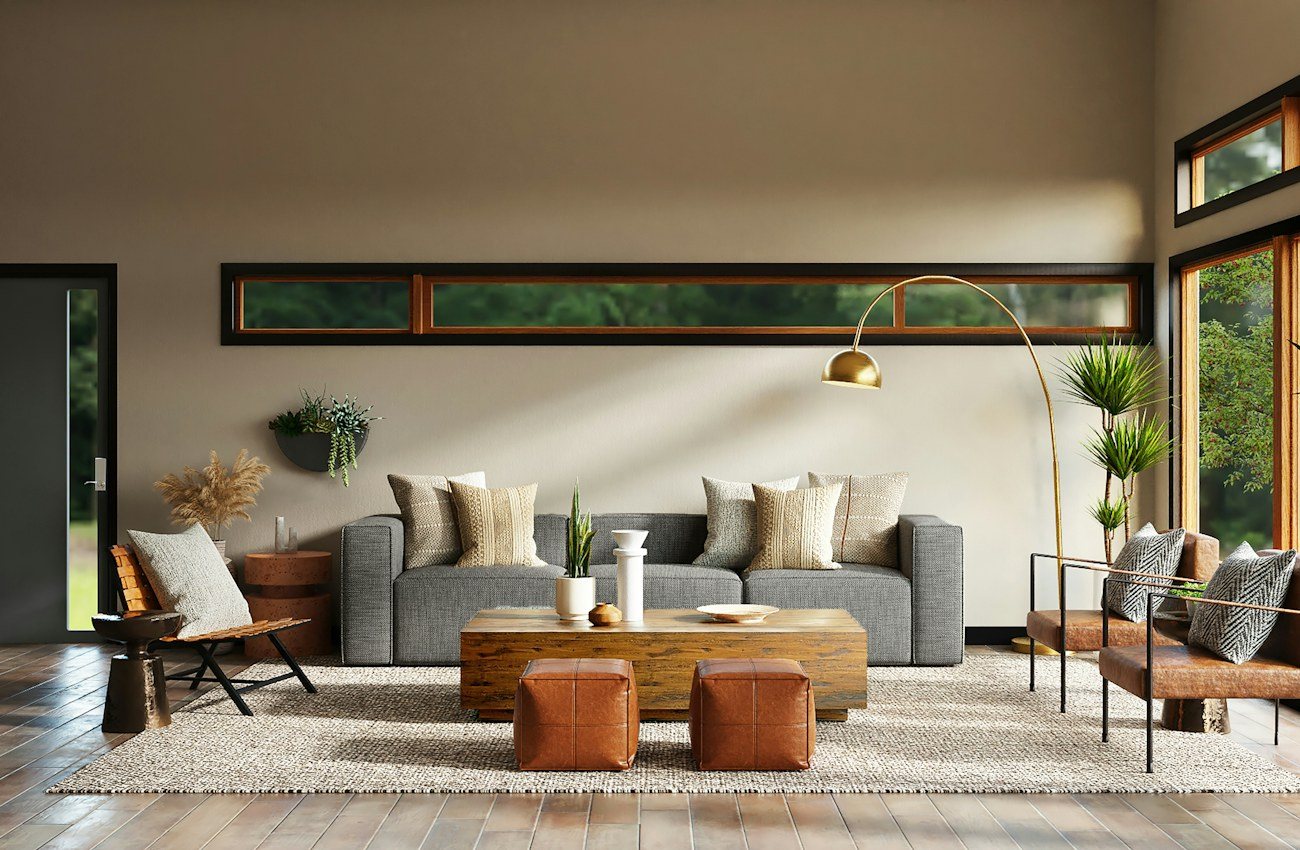
A home refresh works best when it starts with how you actually live. Before choosing paint, furniture, or finishes, spend a little time noticing where your rooms feel effortless and where they create friction. Those observations are more valuable than any trend board.
This guide offers a flexible framework for looking at your home room by room. Use it to build a connected plan rather than a collection of disconnected purchases.
Begin with the everyday moments
Pay attention to the places where your routine slows down. A dim hallway, a crowded entry, a sofa that faces the wrong direction, or a dining table that collects everything can all shape how a home feels. Write down the moments you want to improve, then translate them into practical goals such as better light, easier movement, or calmer storage.
When you lead with experience, the visual decisions become much easier. You are no longer choosing a style in isolation; you are choosing changes that support the way your household works.
Create a consistent thread
A cohesive home does not mean every room looks the same. It means the rooms feel like they belong to the same story. Repeating a material, a color temperature, a metal finish, or a shape can quietly connect spaces without making them feel predictable.
- Choose a small palette of foundational colors and let accent pieces introduce contrast.
- Repeat warm metals, natural timber, or tactile textiles across adjoining spaces.
- Keep lighting temperature consistent so rooms transition comfortably.
- Let architectural details guide the mood rather than fighting the character of the home.
The most successful refresh does not change everything. It makes daily life feel noticeably better.
Give each room a clear role
Many homes feel unsettled because rooms are trying to do too much. A living room may be a workspace, play area, cinema, and guest room all at once. Instead of expecting a single layout to solve everything, define the main purpose of each space and identify which secondary activities truly belong there.
Once the role is clear, furniture placement, storage, and lighting can follow. Flexible pieces are especially useful in rooms with changing demands, but they should still support a strong underlying layout.
Layer light for mood and function
Good lighting is rarely achieved with a ceiling fixture alone. Combine ambient light with task lighting and softer accent sources. Table lamps, wall lights, under-shelf strips, and dimmers allow a room to shift from energetic mornings to quiet evenings without changing the furniture.
If a larger renovation is on the horizon, consider how window replacements or updated glazing could improve daylight. Natural light changes the perception of color, texture, and space more powerfully than almost any decorative choice.
Plan upgrades in a sensible order
Sequence matters. Structural changes, flooring, windows, and built-in storage usually need to happen before decorative finishes. Safety upgrades, wiring needs, and insulation should also be considered early, especially when walls or ceilings are already open.
A connected plan helps protect your investment. You can still work in stages, but each stage should leave the home feeling finished and prepare the ground for what follows.
Finish with what makes it yours
The final layer should be personal. Art, books, plants, travel finds, and family pieces bring warmth that no showroom can duplicate. Edit with care, group objects with intention, and leave space for a room to breathe.
A smarter refresh is not about chasing perfection. It is about making considered choices that help your home feel more comfortable, more useful, and unmistakably yours.